Finnish as a living language
Begin with this week’s expression, then continue into pronunciation, grammar, and the history of written Finnish.
Begin hereLanguage, tradition, and connection
Language, faith, music, art, and memory meet throughout this part of the site. Begin with one story, then follow it as deeply as you wish.
Begin with this week’s expression, then continue into pronunciation, grammar, and the history of written Finnish.
Begin hereMeet its people, hear its meter, and explore Karelian song tradition and new interpretations of the epic.
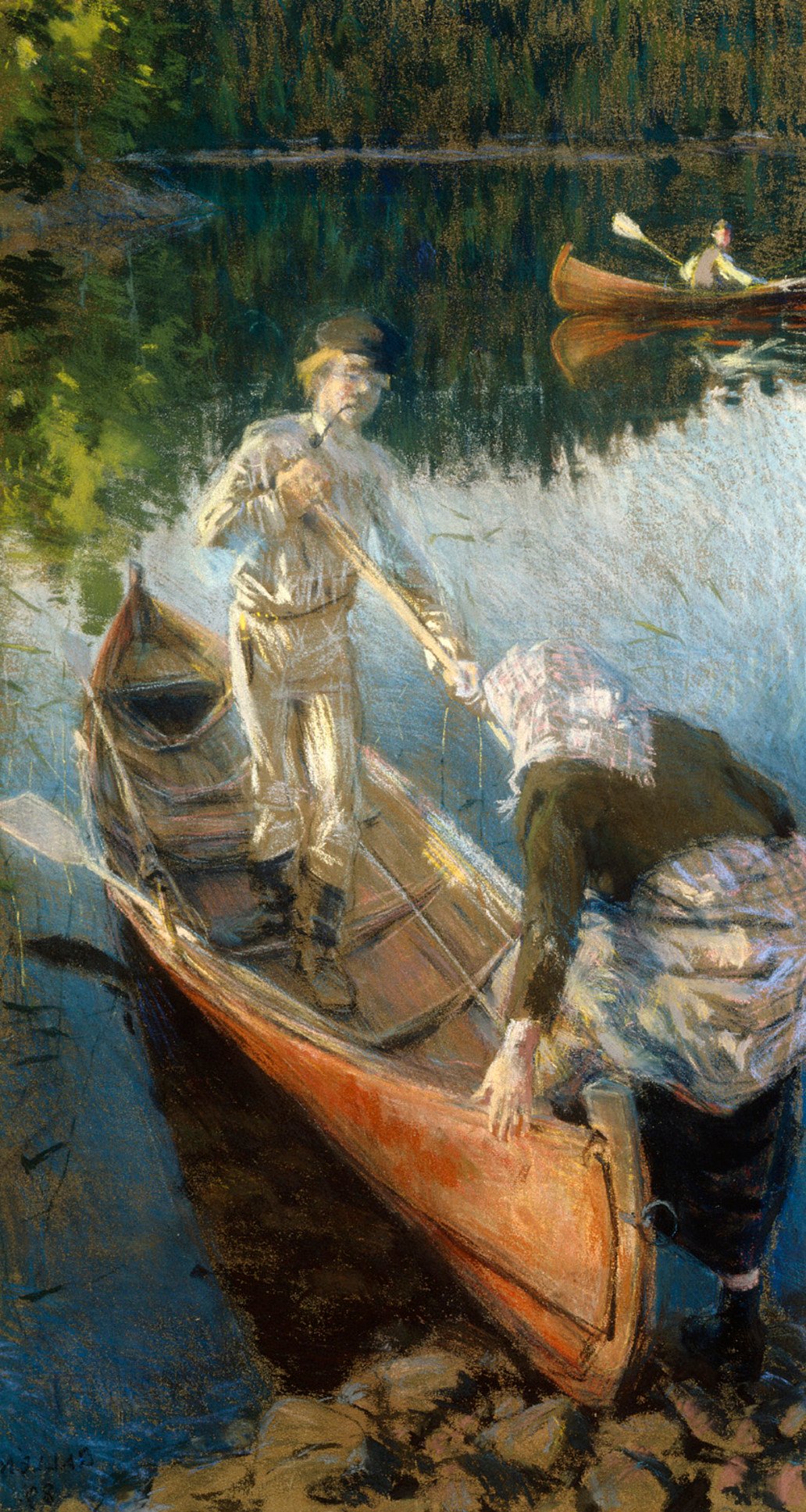
Begin hereLook slowly at Finnish art, from biblical narratives and landscapes to national and mythic subjects.
Begin hereLanguage in our church
Services use both Finnish and English. We sing and pray in both languages, and the sermon moves between Finnish and English. You do not need to speak Finnish to participate.
Learn about worshipContinue learning
FLC does not operate a language school. These independent organizations offer learning opportunities for different ages and levels.
Language lives in many voices
Alongside Finnish, the histories of Finland and its neighboring regions include Swedish, the Sámi languages, Meänkieli, Karelian, and many others. These paths show how language becomes entwined with place, identity, and faith.
Why is a language closely resembling Finnish spoken in northern Sweden? Explore the Torne Valley, speaker estimates, education, language rights, a map, and side-by-side examples.
Open the Meänkieli guide →Finland Swedish is Swedish, not a Finnish dialect or “Swedish with a Finnish accent.” Ostrobothnia is also home to strongly local Swedish dialects.
Read about Swedish in FinlandA closer listen to Vörå Swedish
KAJ’s members come from Komossa, Palvis, and Maxmo, villages now within the municipality of Vörå. The area’s speech belongs to the central Ostrobothnian Swedish dialects. Its pronunciation, inflections, and vocabulary preserve older features and local developments that can sound quite different from standard Swedish.
| Vörå dialect | Standard Swedish | English |
|---|---|---|
| vi sko jo ga tið tå åsta les fy prästin allihåop | vi skulle ju gå dit då för att läsa för prästen allihop | we were all going there to read for the pastor |
| e va bara in toko de va:nli stogo | det var bara en sådan där vanlig stuga | it was just an ordinary cottage like that |
| kåomåsan | Komossa | the local pronunciation of Komossa |
The examples are excerpts from documented Vörå dialect forms. Speech varies among villages and speakers.
Read about the dialects and KAJ’s home-village namesA distant Uralic connection beyond Finland
Mari is not part of Finland’s traditional language landscape, and it is not a Finnic language. It belongs to the Uralic language family and is a distant relative of Finnish. Mari languages are spoken especially in the Mari El Republic and elsewhere in the Volga region of Russia.
The Lord’s Prayer in Meadow Mari and beautiful recordings from the Diocese of Yoshkar-Ola open a window onto the region’s Christian musical tradition.
Hear the Mari prayer and music collection →