1200s–1400s
Names and fragments
Finnish place names, personal names, isolated words, and short fragments survive in Latin- and Swedish-language records. There was not yet a single standardized written Finnish.
From spoken language to literary Finnish
Finnish was spoken for centuries before it was written. Mikael Agricola did not invent the language: he was a foundational developer of literary Finnish who built on spoken language, earlier church translations, and the work of other translators.
1200s–1400s
Finnish place names, personal names, isolated words, and short fragments survive in Latin- and Swedish-language records. There was not yet a single standardized written Finnish.
1449–1450
An unidentified German traveler wrote: Mÿnna tachton gernast spuho sommen gelen. Emÿna daÿda.
In modern Finnish: Minä tahdon kernaasti puhua suomen kielen. En minä taida.
The approximate meaning is, I would gladly speak Finnish. I cannot.
The bishop of Turku may have been apologizing for not knowing Finnish or German, so the interpretation is not entirely certain.
1540s
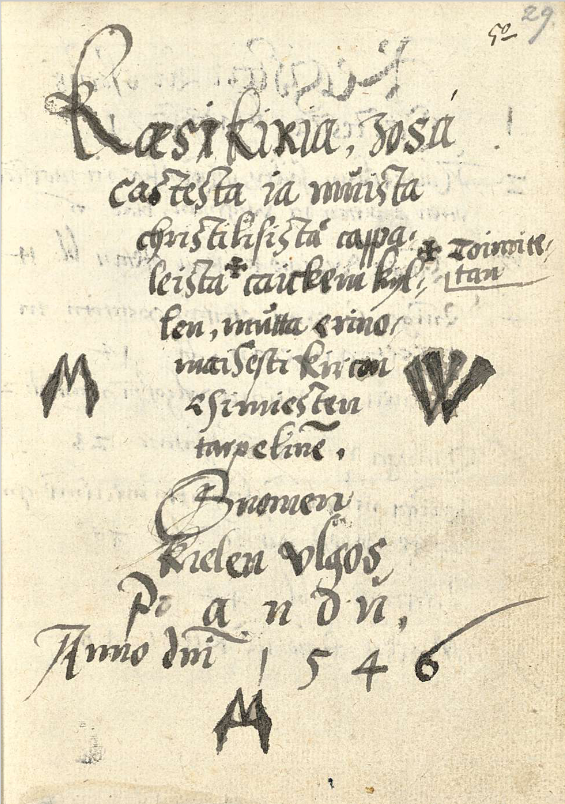
Clergy translated worship texts into Finnish. The Westh Codex preserves a mass and church-handbook texts from this period.
c. 1543
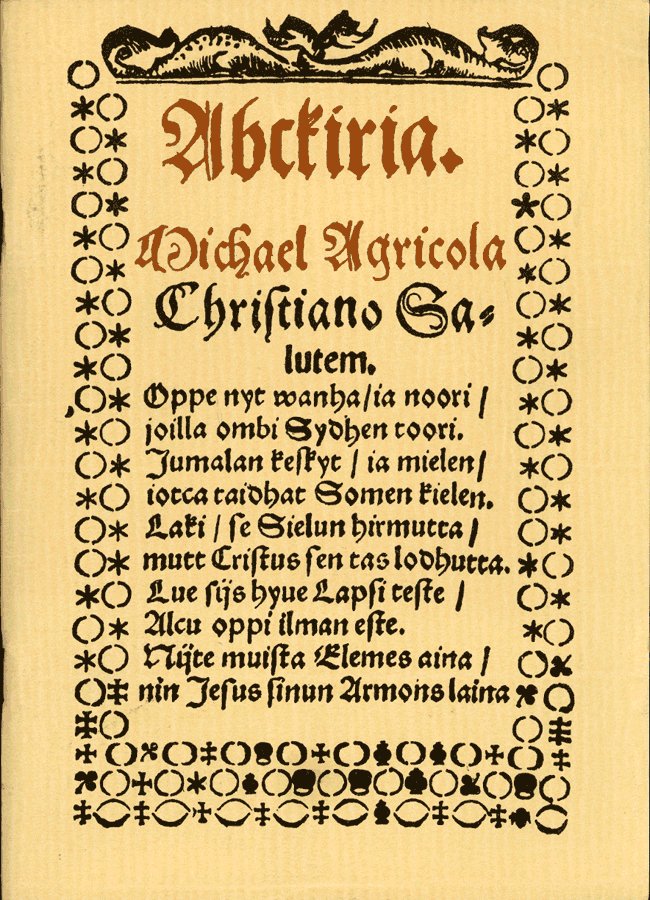
Mikael Agricola’s Abckiria was the first printed book in Finnish. No complete copy of its first edition survives.
1544–1548
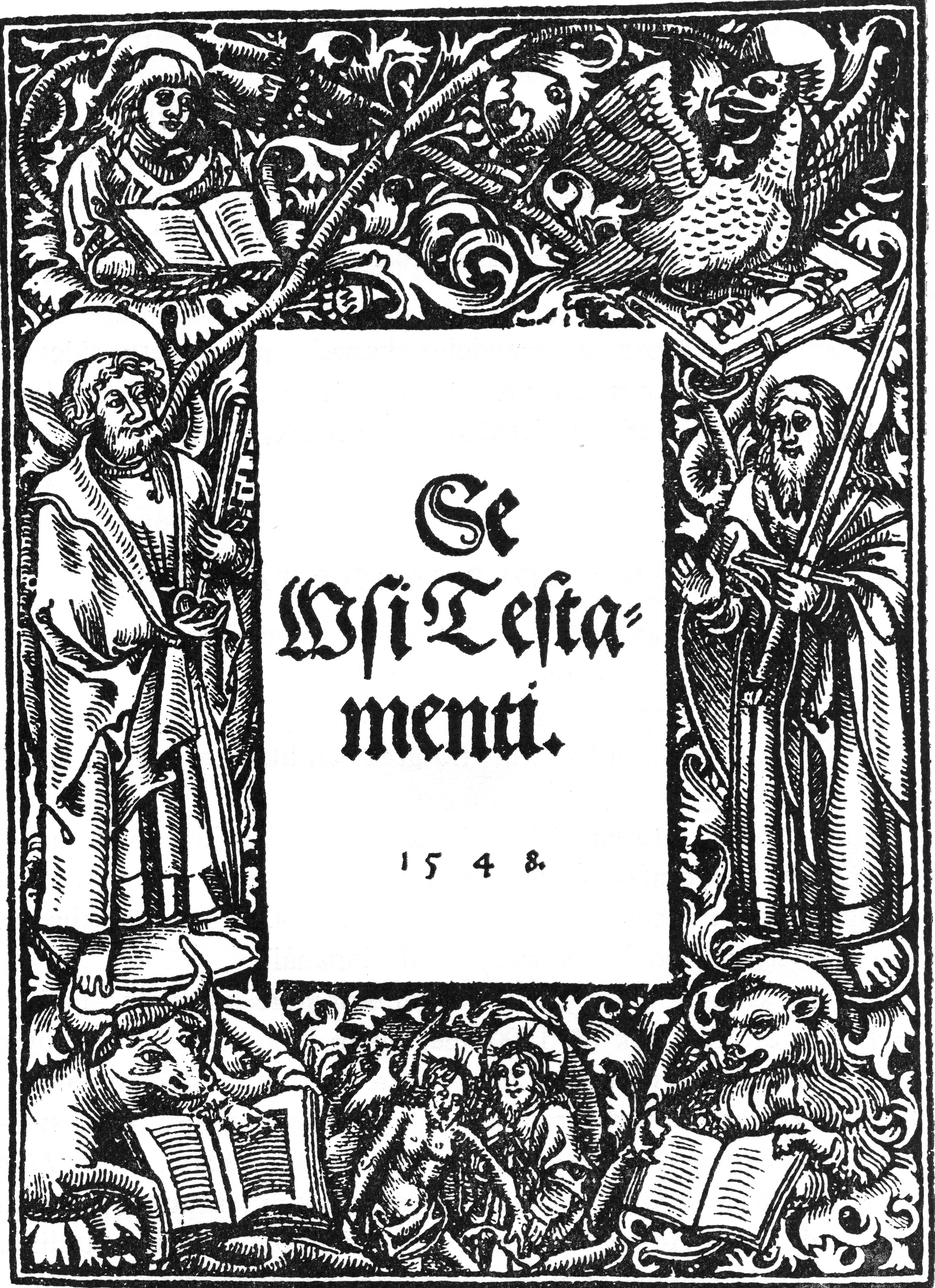
Agricola’s Rucouskiria appeared in 1544 and Se Wsi Testamenti in 1548. Agricola developed literary Finnish largely from southwestern dialects, building on earlier translations and the work of other translators.
1642
The first complete Finnish Bible helped stabilize spelling and greatly expanded the language of church life.
1800s
Newspapers, literature, education, and vocabulary from eastern dialects broadened written Finnish. The Language Decree of 1863 began an administrative transition that strengthened Finnish alongside Swedish.
1900s–today
Modern standard Finnish is the result of centuries of work. Dialects, colloquial Finnish, minority languages, and bilingual life remain part of Finland’s linguistic reality.