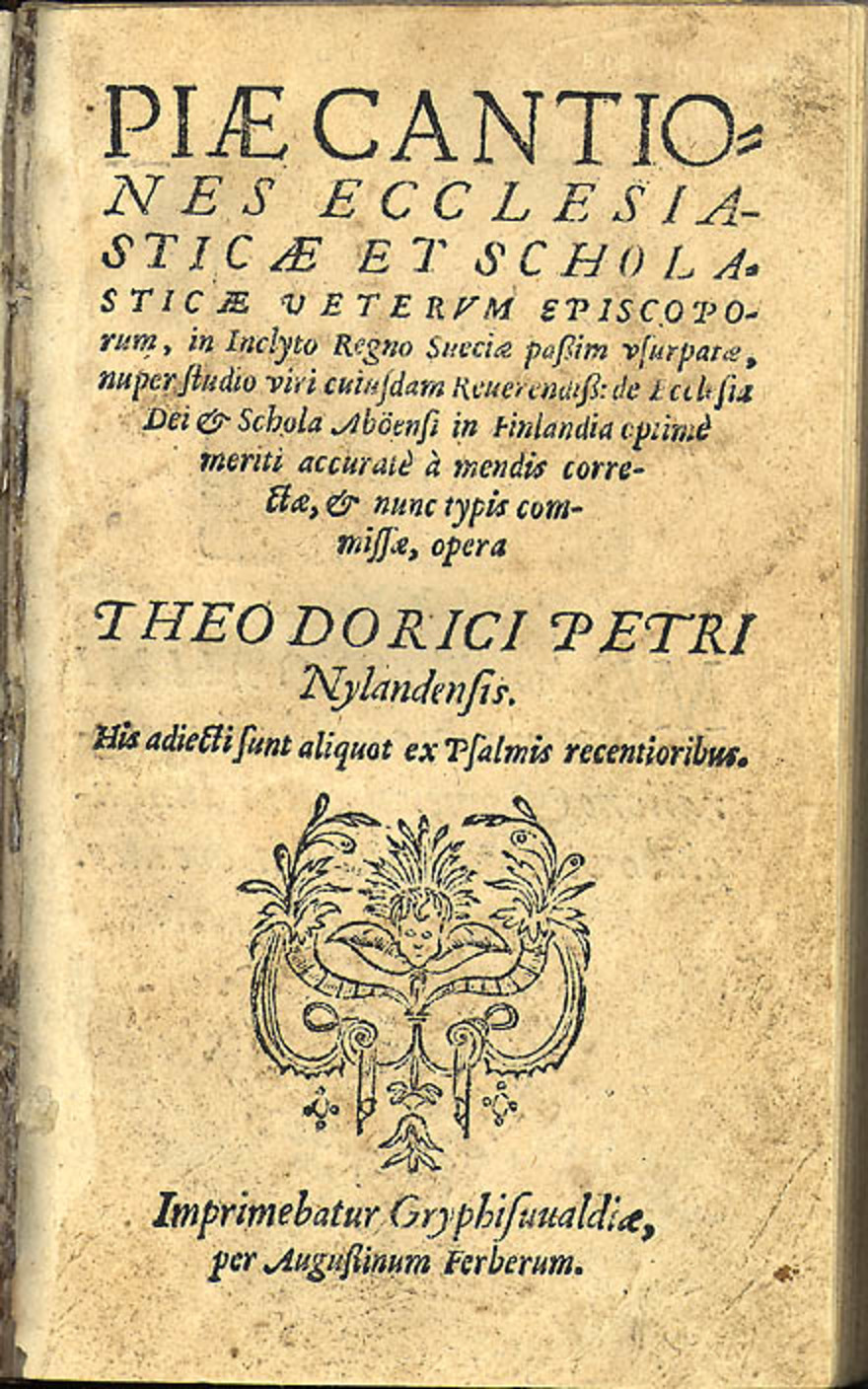
This season’s repertoire includes Personent hodie, Ave maris stella, and Psallat scholarum concio. All three belong to the Piae Cantiones tradition: medieval church and school repertory preserved from material used in Finland and printed in 1582. Their importance is not simply that they are old. They show how the region that is now Finland participated in the wider religious, educational, and cultural networks of the Western Church and the Baltic world.
What was Latin doing in Finland?
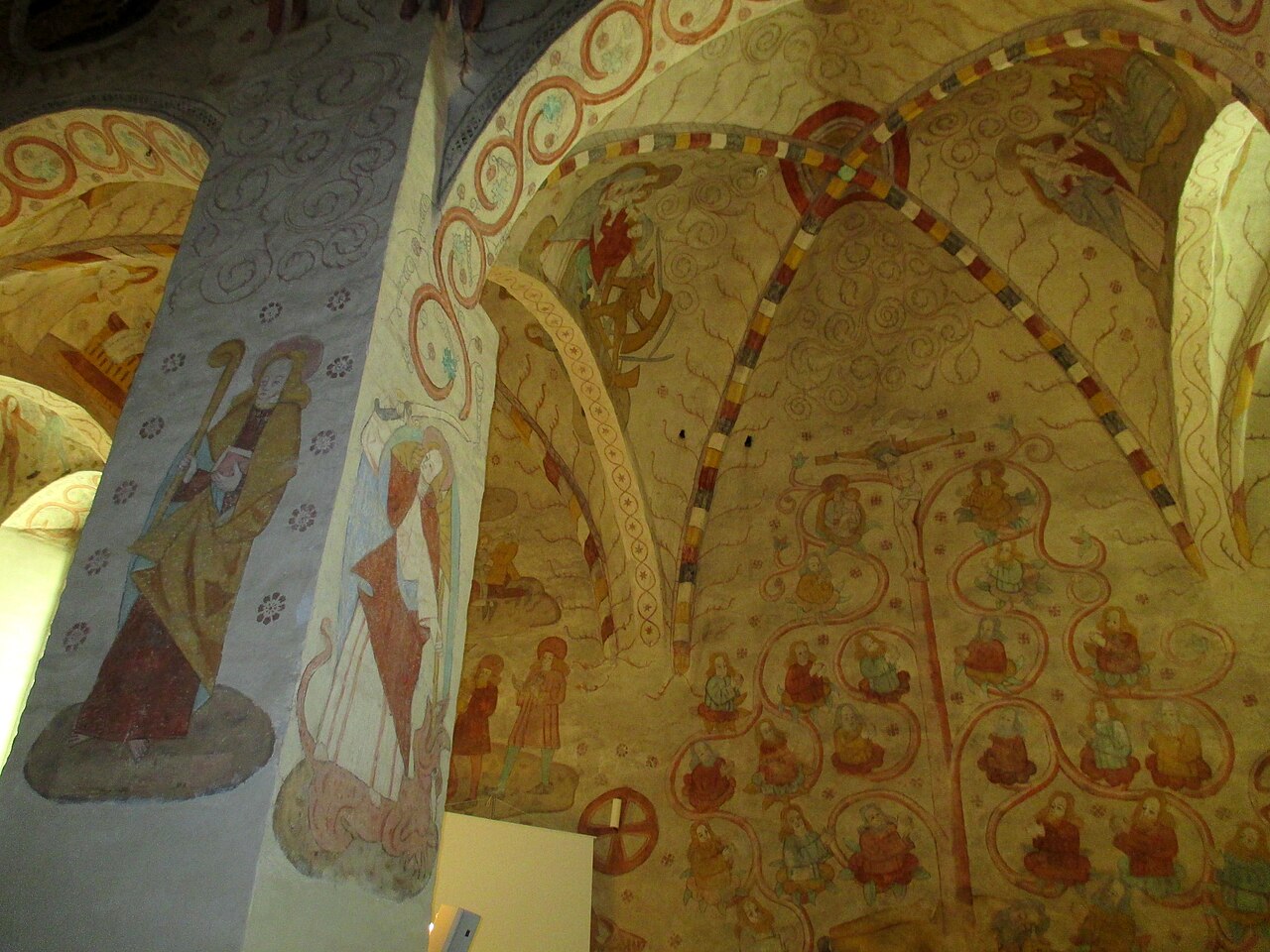
During the Middle Ages, the region that is now Finland formed part of the Swedish realm and Western Christendom. Latin was the shared language of worship, theology, and learning in the Western Church. Turku Cathedral, monasteries, town churches, and schools became centers of Latin song. At the cathedral school in Turku, future clergy and other pupils studied Latin grammar, rhetoric, and music while singing sacred school songs.
The Reformation did not make Latin disappear overnight. Finnish-language liturgy, hymns, and preaching expanded during the sixteenth century, while Latin remained important in schools, scholarship, and parts of the musical inheritance. During this period of transition, the Finnish student Theodoricus Petri Nylandensis prepared Piae Cantiones for publication in Greifswald. Its 74 songs helped carry medieval repertory into Lutheran culture; some later entered official hymnals.
What are the three songs about?
Personent hodie
Let voices resound today
This exuberant Christmas song calls especially on young voices to proclaim the birth of Christ from Mary. Its text moves from the manger to angelic praise and closes with a Gloria. The choir’s present SATB-and-piano score is arranged by D. P. Guerrard.
Nativity · proclamation · the singing of young people and schools
Ave maris stella
Hail, star of the sea
This song addresses Mary through the old image of the “star of the sea,” presenting her as a guide toward Christ. Its language reflects medieval devotion while inviting a question about how Mary’s place was reinterpreted in Lutheran churches. The choir’s edition pairs Latin with the Finnish Tähden lempeen lailla and is associated with Heikki Klemetti’s work on Piae Cantiones.
Mary · guidance · Catholic and Lutheran inheritance
Psallat scholarum concio
Let the gathering of students sing
The song calls a school community to celebrate while remembering the son of Mary. Its imagery brings together the breaking dawn, the shepherd’s pipe, and the child resting in the manger. In the choir’s Latin-and-Finnish score, the Finnish Jo valkee aamun tullen yö is marked with Heikki Klemetti’s initials.
School · Christmas feast · shepherds · communal song
Why sing them in 2026?
Performing old music is more than reenacting the past. In these songs, history becomes audible again:
- Latin reminds us that Finnish church culture belonged to a wide European network long before an independent Finnish state existed.
- Piae Cantiones connects medieval Catholic inheritance, post-Reformation school culture, and later Finnish Lutheran choral life.
- Choral leaders such as Heikki Klemetti arranged old material for new generations. A choir singing it now becomes another link in that chain of transmission.
- The three texts approach Christmas from different directions: joy at the manger, imagery surrounding Mary, and the shared song of a school community.
Hear the choir around Seattle
Where is the Finnish Choral Society singing during the 2026 Christmas season?
Repertoire varies by venue, so all three Latin pieces may not be heard at every appearance.
Read and listen further
- Piae Cantiones, 1582: digitized facsimile from the National Library of Finland
- Overview of Finnish music history, University of the Arts Helsinki
- Piae Cantiones, RILM Music Encyclopedias
- Ave maris stella = Tähden lempeen lailla, University of Jyväskylä library record
- Psallat scholarum concio = Jo valkee aamun tullen yö, National Library of Finland search service