Borders, people and memory
A timeline of Finnish history
A selective guide to the political, religious, linguistic and social changes that help explain Finland today.
How to read the timeline
Sweden, Russia and Finland
The territory of present-day Finland did not pass back and forth as a single unit. From the Middle Ages, much of western and southern Finland became part of the Swedish realm. In Karelia and the eastern borderlands, political authority, trade and church traditions developed through long contact and conflict involving Sweden, Novgorod and later Russia. Finland became an autonomous grand duchy within the Russian Empire in 1809 and an independent state in 1917.
Changing geography
History happens on a changing map
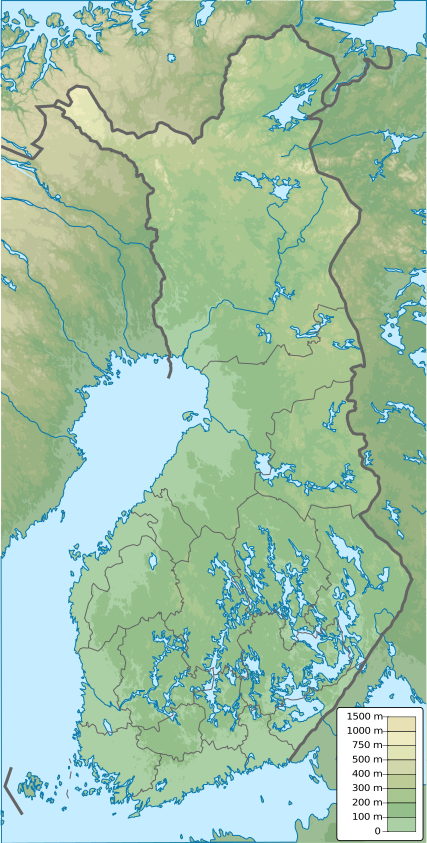
This is a map of Finland today. Across the timeline, realms, administrative borders, and routes of movement changed. Karelia, the Torne Valley, Turku, Viipuri, and Helsinki belonged to different political and cultural settings at different times.
The map is a geographic starting point. It is not a claim that the present state or its borders always existed.
Migration lens
A recurring Finnish story: leaving and returning
Economic change, land scarcity, work, war and education have all shaped Finnish migration. Two major movements matter especially to this site’s wider story.
Explore the migration atlasAround the turn of the twentieth century, more than 300,000 people left Finland for North America. An estimated share later returned.
After the Second World War, migration turned mainly toward Sweden. Many migrants settled there permanently, while substantial numbers later returned to Finland.
c. 9000 BCE–1200s
Before modern states
People settled the region after the last Ice Age. Trade, language, belief and ways of life developed long before present-day national borders.
c. 9000 BCE
Settlement after the Ice Age
Communities spread into the land as the ice retreated. Hunting, fishing, farming and Baltic trade shaped different regions over thousands of years.
Before the Middle Ages
Finnic-speaking and Sámi communities
The area was home to communities with overlapping trade routes, languages and cultural ties, including ancestors of Finnish- and Karelian-speaking peoples. The Sámi are the Indigenous people of Sápmi, a region extending across the northern parts of present-day Norway, Sweden, Finland and Russia.
c. 1000–1200
Christianity takes root gradually
Christianity did not arrive in a single year. Archaeological evidence, including changing burial customs, shows Christian influence spreading through trade and contacts from both eastern and western Christian traditions. By the 1200s, western Finland was being organized within the Roman Catholic Church and the Swedish realm.
Connection to our storyThe familiar story of Bishop Henry and a crusade in the 1150s belongs to later medieval tradition and should not be treated as a precise account of a single conversion event.
1200s–1809
Part of the Swedish realm
Western and southern Finland became integrated into the Swedish kingdom and the Western Christian world. Eastern Finland and Karelia remained a shifting borderland.
Print and Reformation
Finnish becomes a printed language
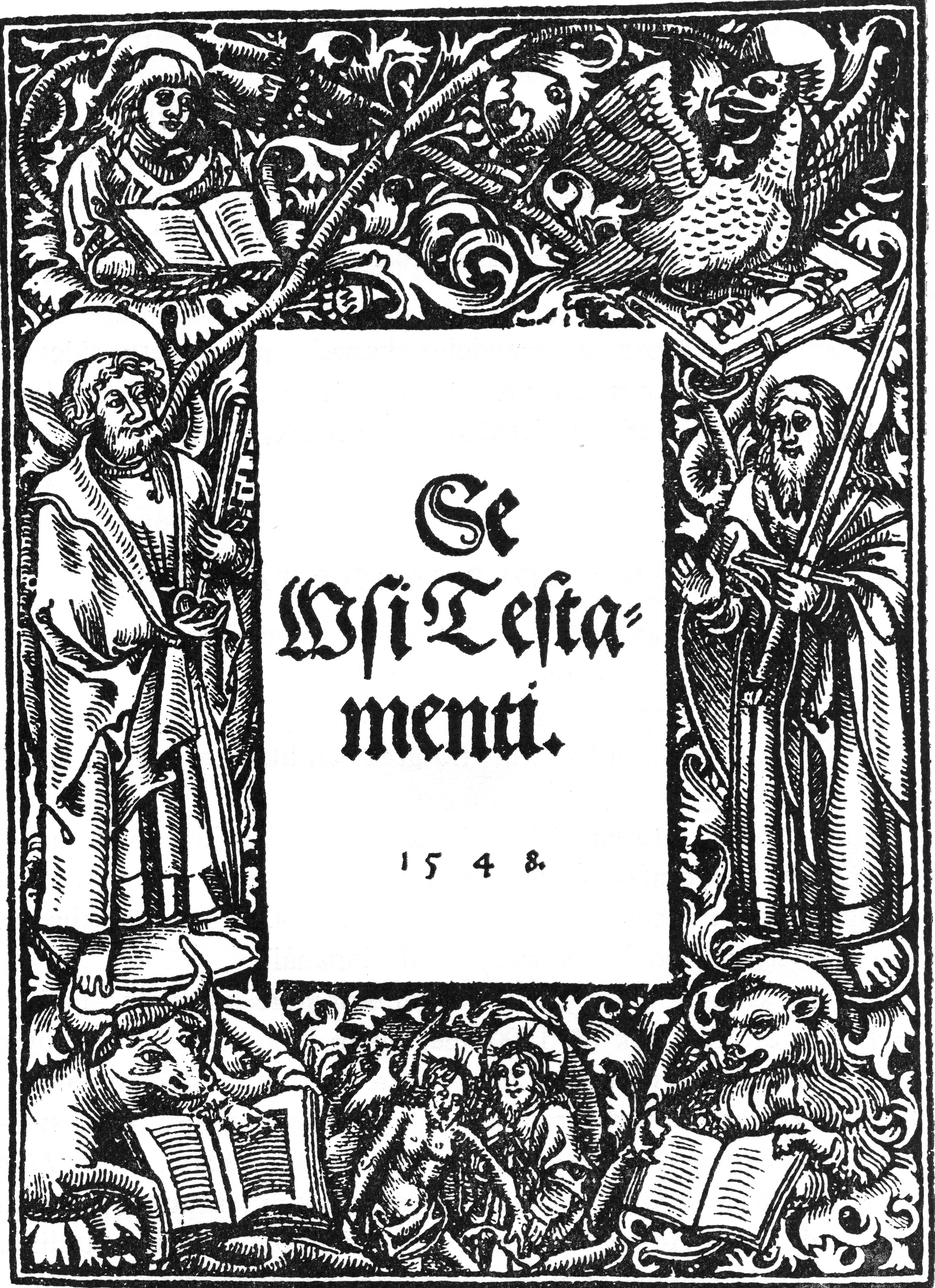
Mikael Agricola’s Se Wsi Testamenti appeared in 1548. It was not the first text written in Finnish, but it became a landmark of early literary Finnish and Finnish-language church life within the Swedish realm.
Mikael Agricola, Se Wsi Testamenti, 1548. National Library of Finland digitization, CC0. Open the source record
1300
Turku Cathedral is consecrated
Turku became the center of the medieval diocese. During the Middle Ages, the church in the region was Roman Catholic and connected Finland to the wider western Christian world.
1323
Treaty of Nöteborg
Sweden and Novgorod agreed to an early documented boundary in the region. Its precise medieval course remains a subject of scholarly discussion, and later wars and treaties moved the border repeatedly.
1488
Missale Aboense is printed
The Latin missal for the Diocese of Turku was printed in Lübeck. It is regarded as the first book printed for Finland, although it was not printed in Finland and was not written in Finnish.
1500s–1642
The Lutheran Reformation
The Reformation reached the Swedish realm, including Finland. The first surviving evidence of Finnish-language services dates from the 1530s, and Mikael Agricola’s Finnish Mass and church handbook were printed in 1549. Latin, Swedish and Finnish continued side by side for a long time, so there was no single nationwide language-switch year. Agricola’s Finnish New Testament appeared in 1548, and the first complete Finnish-language Bible in 1642; both were printed outside Finland.
Connection to our storyThe gradual use of Finnish in worship and scripture became a central root of Finland’s Lutheran and literary traditions.
1582
Piae Cantiones is published
The collection Piae Cantiones brought together Latin songs used by students and church communities in the Diocese of Turku. It was compiled by Theodoricus Petri and printed in Greifswald. Many of its songs were already older, so 1582 is the publication date, not the first year they were sung.
1640
The Royal Academy of Turku
The first university in the territory of present-day Finland was founded in Turku. After the Great Fire of Turku in 1827, it moved to Helsinki in 1828.
1700–1743
War, occupation and moving borders
The Great Northern War brought the Russian occupation remembered in Finland as the Great Wrath. The Treaty of Nystad in 1721 transferred southeastern territories, including Viipuri, to Russia. A new war and the occupation called the Lesser Wrath ended with the Treaty of Åbo in 1743, which moved the border farther west.
1809–1917
The autonomous Grand Duchy
In the 1808–1809 war between Sweden and the Russian Empire, Russia occupied Sweden’s eastern provinces. The territories became the core of the Grand Duchy of Finland, with a separate central administration under the Russian emperor and many inherited laws, privileges and Lutheran structures left in place.
1808–1809
War between Sweden and Russia (Suomen sota)
Russian forces crossed into the eastern provinces of the Swedish realm in February 1808. At the Diet of Porvoo in 1809, the estates swore allegiance to Emperor Alexander I, who pledged to uphold their religion, fundamental laws, privileges and rights. Sweden ceded the territory to Russia in the Treaty of Fredrikshamn, or Hamina, in September 1809.
1812
Helsinki becomes the capital
The capital moved from Turku to Helsinki, closer to St Petersburg. In the same year, the territories known as Old Finland, including Viipuri, were incorporated into the Grand Duchy. The university moved from Turku to Helsinki in 1828.
1835 and 1849
The Kalevala takes shape
Elias Lönnrot published the first Kalevala in 1835 and a substantially expanded edition in 1849. He shaped a literary epic from oral poems recorded especially in White Sea Karelia, as well as material from other Karelian, Finnish and Ingrian communities. Lönnrot edited and combined the poems and their different Karelian and Finnish language forms into the Finnish-language work known today as the Kalevala.
Connection to our storyThe Kalevala became one of the most important works of Finnish-language literature. Its vocabulary and poetic language influenced developing literary Finnish, while its stories inspired Finnish art and music and became closely connected with national identity. Its Karelian and Ingrian sources are an essential part of that history.
1863
The Language Decree
Emperor Alexander II’s decree began a twenty-year process through which Finnish was to gain equal standing with Swedish in matters directly concerning the Finnish-speaking population. The change widened the use of Finnish in administration, education and public life, but it did not remove Swedish from those spheres.
1880s–1920s
Mass emigration overseas
More than 300,000 people left Finland for North America around the turn of the twentieth century. Work, access to land, family networks and economic opportunity shaped the movement, and some migrants later returned to Finland.
Connection to our storyThis era created many of the Finnish communities of Washington, Oregon and the wider Pacific Northwest.
1899–1917
Russification and resistance
Imperial policies sought to reduce Finnish autonomy. Finns responded in different ways, including petitions, constitutional resistance, cultural activism and accommodation. The revolutions in Russia in 1917 then created the political conditions in which independence became possible.
1906–1907
Universal and equal suffrage
Finland created a unicameral Parliament with universal and equal suffrage. Nineteen women elected in 1907 became the world’s first women members of a national parliament.
1917–1938
Independence and a divided young nation
Independence arrived during revolution in Russia, but Finland’s first years were marked by civil conflict and the difficult work of reconciliation.
Everyday life around 1900
City, home, and sauna
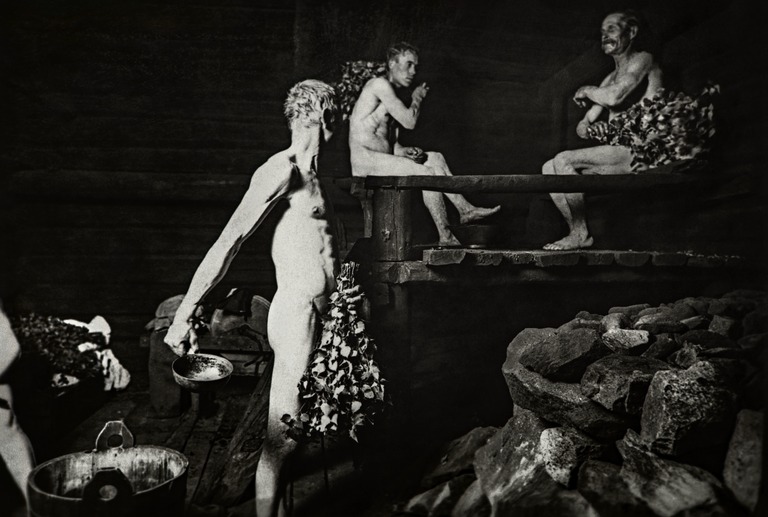
This Helsinki sauna from the early twentieth century reminds us that political events alone do not describe life in the young nation. Urbanization, work, housing, health, and shared customs shaped everyday experience on both sides of independence.
Unknown photographer, Helsinki City Museum, G30758. CC BY 4.0. Resized. Open the source record
December 6, 1917
Finland declares independence
Parliament approved the declaration of independence. Soviet Russia recognized Finland soon afterward.
January–May 1918
The Finnish Civil War
The war between the Reds and Whites was short and devastating. Executions, prison camps, hunger and political division left deep memories on both sides.
1919
A democratic republic
Finland adopted a republican constitution, and K. J. Ståhlberg became its first president. Parliamentary democracy survived the pressures of the interwar period.
1921
Åland’s autonomy is confirmed
The League of Nations recognized Finnish sovereignty over the Åland Islands while confirming international guarantees for the islands’ Swedish language, culture, local autonomy and demilitarized status.
1923
Freedom of religion becomes law
The Freedom of Religion Act came into force. It affirmed the right to belong to a religious community, change communities or remain outside them, a significant change in a country where the Lutheran church had long held a public and legal position.
1939–1945
Finland at war
Finnish historical usage conventionally distinguishes the Winter War, Continuation War and Lapland War. All belong to the wider history of the Second World War, but their belligerents, immediate causes, war aims and settlements were different.
1939–1940
The Winter War
After the 1939 German-Soviet nonaggression pact placed Finland in the Soviet sphere of interest and negotiations over Soviet territorial and base demands failed, the Soviet Union attacked Finland on November 30, 1939. The Moscow Peace Treaty ended the war on March 13, 1940. Finland remained independent but ceded the Karelian Isthmus, Ladoga Karelia and other territories and leased Hanko as a Soviet naval base.
1941–1944
The Continuation War
After Germany attacked the Soviet Union, war resumed between Finland and the Soviet Union. Finland fought in extensive military cooperation with Germany, although the two countries did not conclude a formal treaty of alliance. Finnish forces retook territories lost in 1940 and occupied East Karelia beyond Finland’s 1939 border. The Moscow Armistice of September 1944 restored the 1940 boundary, required Finland to cede Petsamo, lease Porkkala to the Soviet Union, pay reparations and remove German forces from its territory.
1944–1945
The Lapland War
To fulfil the armistice terms, Finland fought to remove German troops from northern Finland. During their retreat, German forces destroyed extensive infrastructure and settlements in Lapland.
War’s human consequences
Evacuation, war children and resettlement
About 400,000 Karelians and other residents of ceded areas were resettled elsewhere in Finland. Tens of thousands of children were sent temporarily to Sweden and other Nordic countries.
Women’s wartime service
Everyday work in wartime
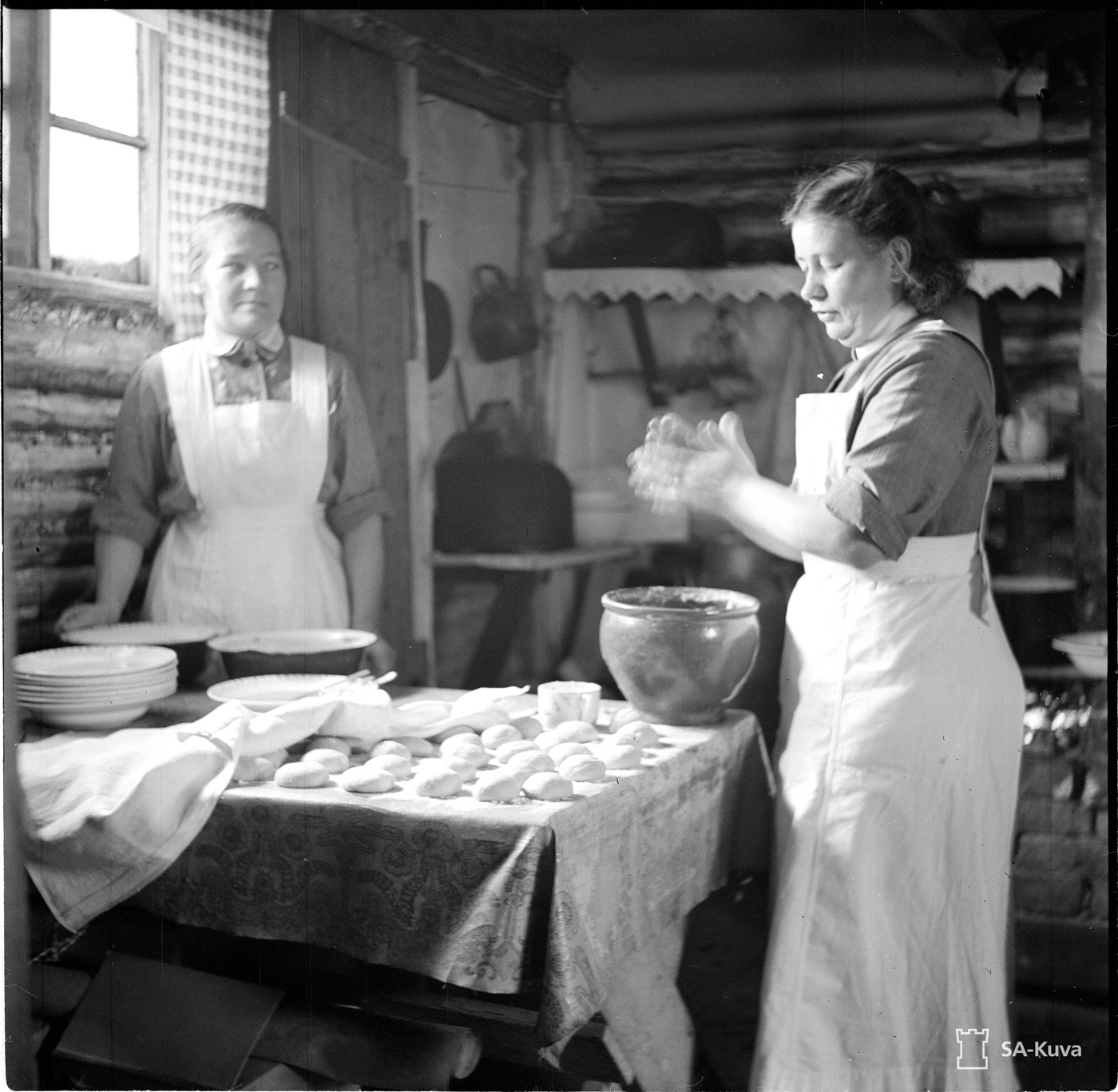
This SA-kuva photograph shows catering Lottas baking at Syväri in occupied East Karelia on March 20, 1942, during the Continuation War. Lotta Svärd members worked in food provision, nursing, communications, air surveillance, civil defense, and other support roles. The photograph brings women’s labor and responsibility into the history of wartime Finland while retaining the specific and difficult context in which that work took place.
Photograph: SA-kuva, March 20, 1942. CC BY-SA 4.0. Resized. Open the source record
1945–1989
Reconstruction, neutrality and migration
Finland rebuilt, paid war reparations, industrialized and developed the institutions of a Nordic welfare state while carefully managing relations with the Soviet Union.
1944–1952
Reconstruction and reparations
Finland rebuilt homes and infrastructure, resettled displaced families and paid war reparations to the Soviet Union. The reparations program contributed to the expansion of metalworking, shipbuilding and other export industries.
1948
A new relationship with the Soviet Union
Finland and the Soviet Union concluded the Treaty of Friendship, Cooperation and Mutual Assistance. It became a central framework for Finnish foreign policy during the Cold War, alongside Finland’s effort to preserve parliamentary democracy and room for action between East and West.
1955
A wider international role
Finland joined the United Nations and the Nordic Council. Nordic agreements on a common labor market and passport-free travel made movement across the region easier.
1950s–1970s
Migration to Sweden
Hundreds of thousands of Finns moved abroad, especially to Sweden, where industrial jobs and higher wages attracted workers. Many returned, while others built permanent Finnish-Swedish communities.
Connection to our storyThe peak around 1969–1970 was mainly a movement to Sweden, not to the United States.
1975
The Helsinki Final Act
Finland hosted the Conference on Security and Co-operation in Europe, an important moment in Cold War diplomacy.
1990s–today
European and Nordic Finland
The end of the Cold War changed Finland’s economy, international position and security policy.
1995
Finland joins the European Union
EU membership deepened Finland’s political and economic integration with Europe. Euro notes and coins entered use in 2002.
April 4, 2023
Finland joins NATO
Following Russia’s full-scale invasion of Ukraine and a national policy reassessment, Finland became a member of NATO and its collective defence.
Today
A multilingual democratic society
Finland is a Nordic parliamentary republic and a member of the EU and NATO. Finnish and Swedish are the national languages, and the Sámi are an Indigenous people whose languages have legal protection in their homeland region. Migration has added further languages and communities to contemporary Finland.
Go deeper
Sources and further reading
These institutional and scholarly sources provide fuller context for this selective timeline.