Maps, migration and community
From Finland to the Pacific Northwest
Follow the people, places, churches and cultural networks that connected Finland with Washington, Oregon and British Columbia, and see how that history helps explain FLC today.
How a community took root
Finnish migration helped create communities around Puget Sound, Grays Harbor and the lower Columbia River. People did more than move: they formed congregations, choirs, temperance societies, lodges, newspapers and mutual-aid networks. Seattle’s Finnish Lutheran congregation, founded in 1919, grew within that wider world.
Work and migration
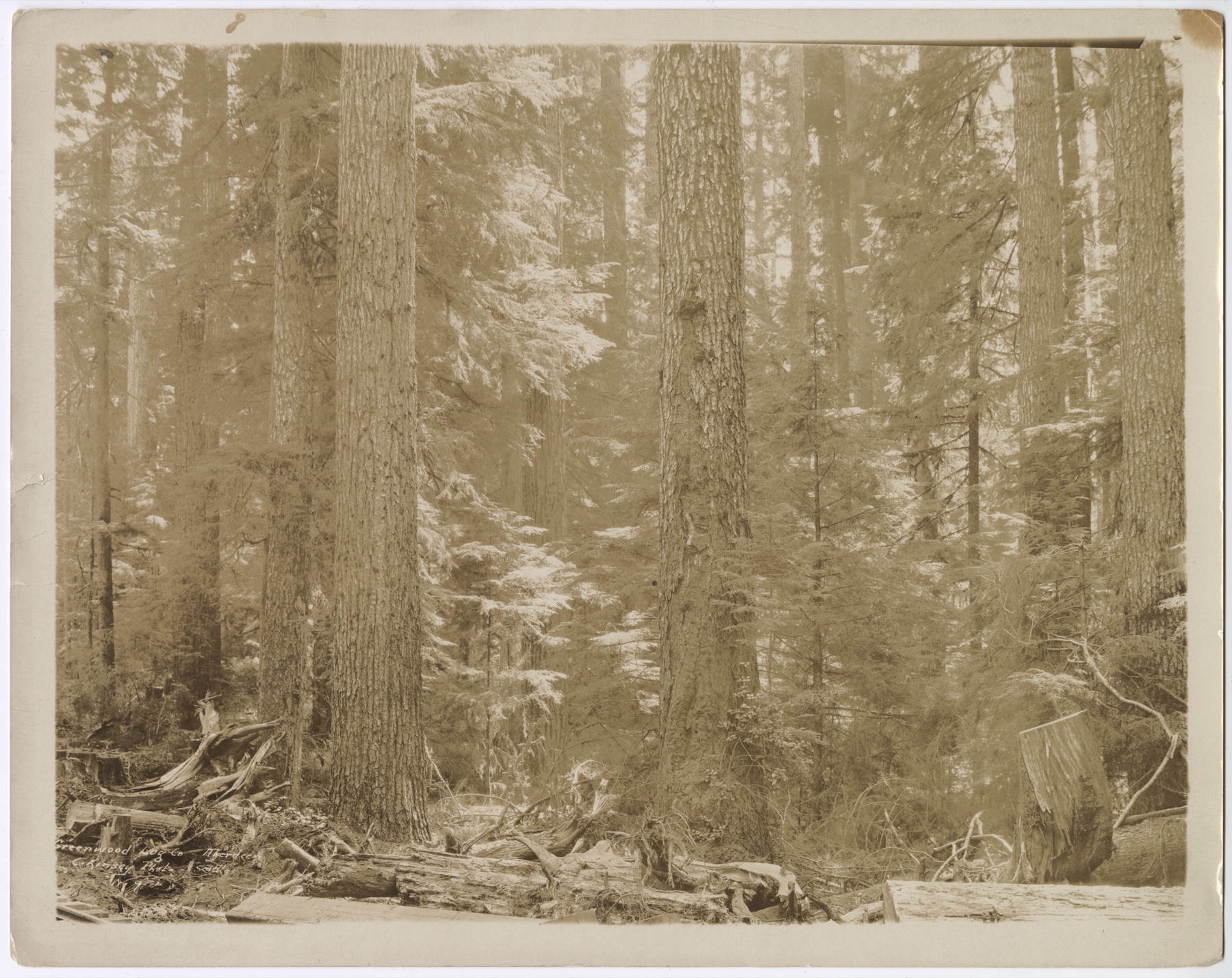
The Grays Harbor timber economy
This 1913 photograph shows a Greenwood Log Company logging site at Aberdeen. Logging and milling brought workers from many countries to Grays Harbor and were among the industries that drew Finnish immigrants to the region.
The archival record does not identify the ethnicity of any people who may appear. We therefore present it as a view of the Grays Harbor working landscape, not as a portrait of Finnish loggers.
Country and landscape
Where is Finland?
Finland is in Northern Europe between Sweden, Norway and Russia. Place markers give geographic orientation and, for municipalities, the latest complete official population. Church markers highlight active Lutheran churches, important church architecture and the Swedish-language Diocese of Borgå. They do not represent documented migrant origins.
The Viipuri/Vyborg church lies beyond Finland’s present border in Russia and is included for its Finnish and Lutheran history. Haparanda lies in Sweden and is included because Finnish and Meänkieli culture crosses the Tornio River border. The Porvoo marker identifies the cathedral and diocesan seat; the map does not attempt to draw the non-contiguous diocese across Finland and Åland.
Cities and places on the map
Helsinki
Finland’s capital on the Gulf of Finland
694,392 residents · 31 Dec 2025
Local Lutheran parishesTurku
Historic city on Finland’s southwest coast
209,633 residents · 31 Dec 2025
Local Lutheran parishesPorvoo · Borgå
Finland’s second-oldest city and a bilingual center of Finnish- and Swedish-language life
51,863 residents · 31 Dec 2025
Local Lutheran parishesTampere
An inland city between two lakes
263,337 residents · 31 Dec 2025
Local Lutheran parishesJyväskylä
A university city in Central Finland, surrounded by lakes and closely associated with Alvar Aalto’s architecture
149,895 residents · 31 Dec 2025
Jyväskylä Lutheran ParishIisalmi
A North Savo town and regional center in the Finnish Lakeland
20,205 residents · 31 Dec 2025
Iisalmi Lutheran Parish (Finnish)Kotka
A maritime city at the mouth of the Kymi River on the Gulf of Finland
50,029 residents · 31 Dec 2025
Kotka-Kymi Lutheran Parish (Finnish)Punkaharju (Savonlinna)
A celebrated ridge and national landscape in Finnish Lakeland; the former municipality became part of Savonlinna in 2013
Punkaharju Church (Finnish)Vaasa
A bilingual city on the Gulf of Bothnia
71,209 residents · 31 Dec 2025
Local Lutheran parishesOulu
A northern city on the Gulf of Bothnia
217,469 residents · 31 Dec 2025
Local Lutheran parishes (Finnish)Rovaniemi
A gateway to Finnish Lapland
66,191 residents · 31 Dec 2025
Rovaniemi Lutheran ParishSodankylä
A large northern municipality in Finnish Lapland, north of the Arctic Circle
8,095 residents · 31 Dec 2025
Sodankylä Lutheran Parish (Finnish)Ylitornio
A Finnish municipality in the Tornio River Valley, where the border meets a shared cross-border culture
3,673 residents · 31 Dec 2025
Ylitornio Lutheran Parish (Finnish)Haparanda · Haaparanta (Sweden)
A Swedish border town beside Tornio, included to show the shared Finnish, Meänkieli and Swedish life of the Tornio River Valley
Haparanda Parish, Church of SwedenLappeenranta
A South Karelian city on the shore of Lake Saimaa
73,241 residents · 31 Dec 2025
Local Lutheran parishesImatra
A South Karelian city known for the Imatrankoski rapids and industrial history
24,345 residents · 31 Dec 2025
Imatra Lutheran ParishFinnish municipal populations: Statistics Finland, population structure on 31 December 2025 (published 2026). Punkaharju is part of Savonlinna, and Haparanda is in Sweden, so neither displays a Finnish municipal population here. Open the source
Churches and church architecture
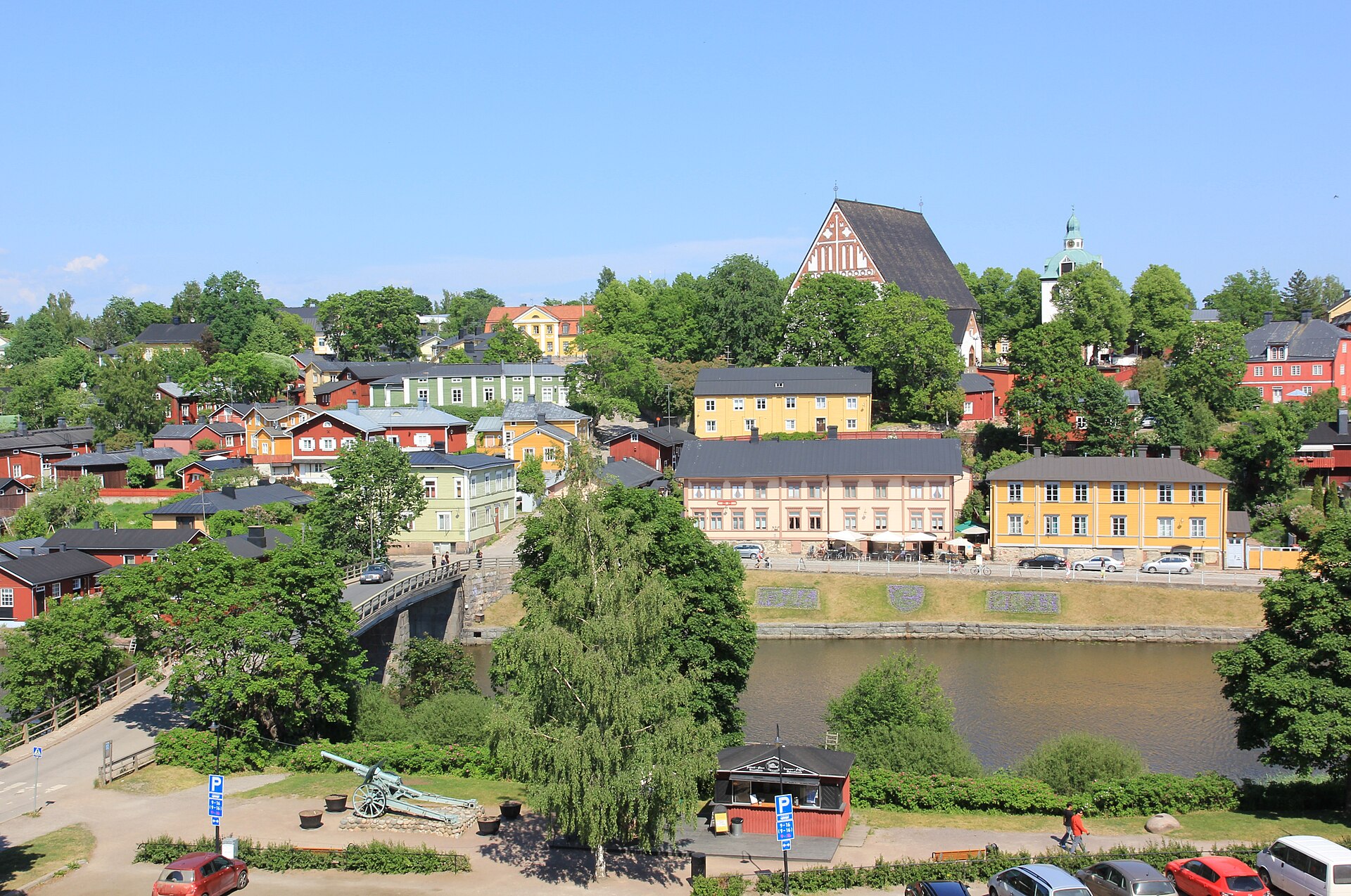
Porvoo Cathedral and the Diocese of Borgå
Porvoo Cathedral serves both the Finnish parish and Borgå Swedish Cathedral Parish. It is also the bishop’s church of the Diocese of Borgå, which gathers Swedish-majority Lutheran parishes across Finland and Åland rather than one continuous geographic region.
Dioceses of the Evangelical Lutheran Church of Finland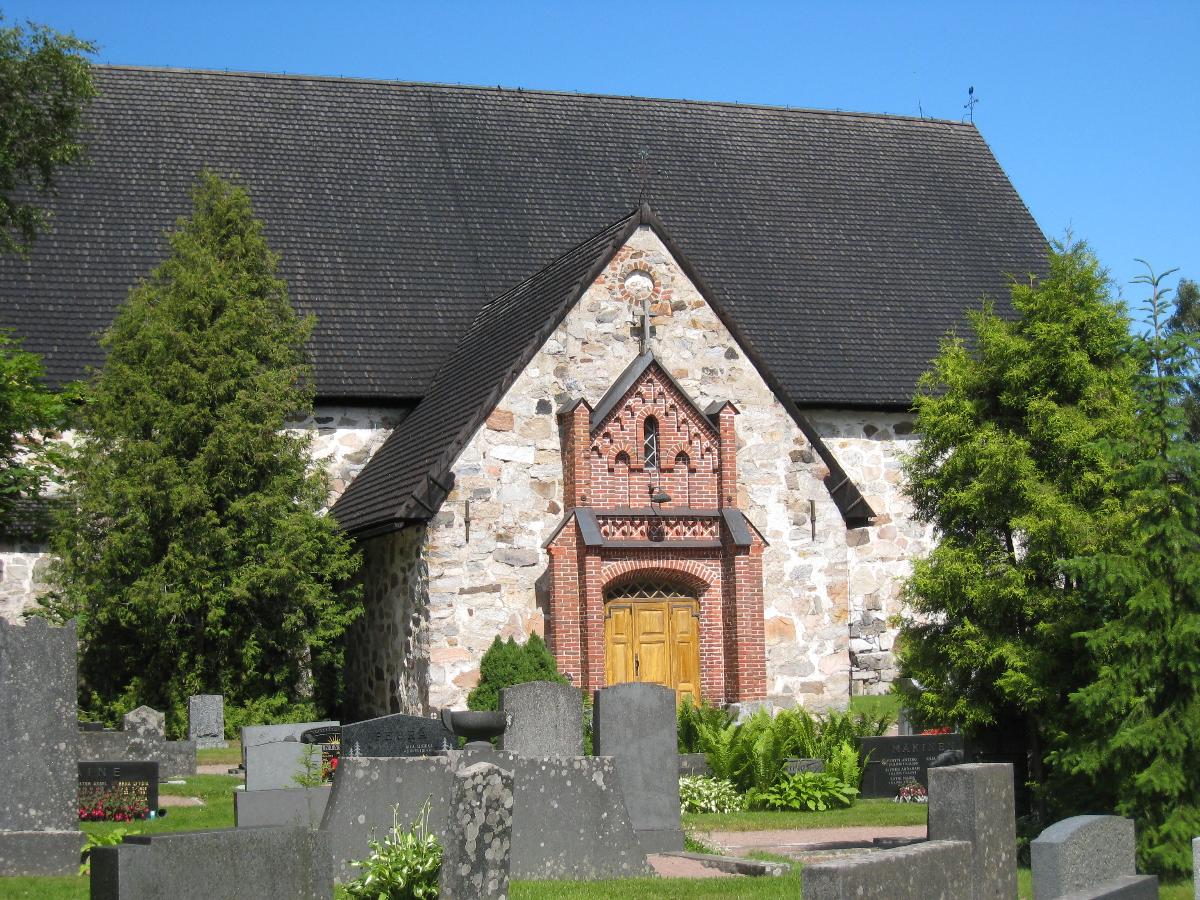
Kalanti Church (St. Olaf’s Church)
Built around 1430–1450, this medieval stone church is especially known for its wall and vault paintings made in the early 1470s by Petrus Henriksson. His signed work gave its name to the “Kalanti school” of medieval church painting.
Finnish Heritage Agency record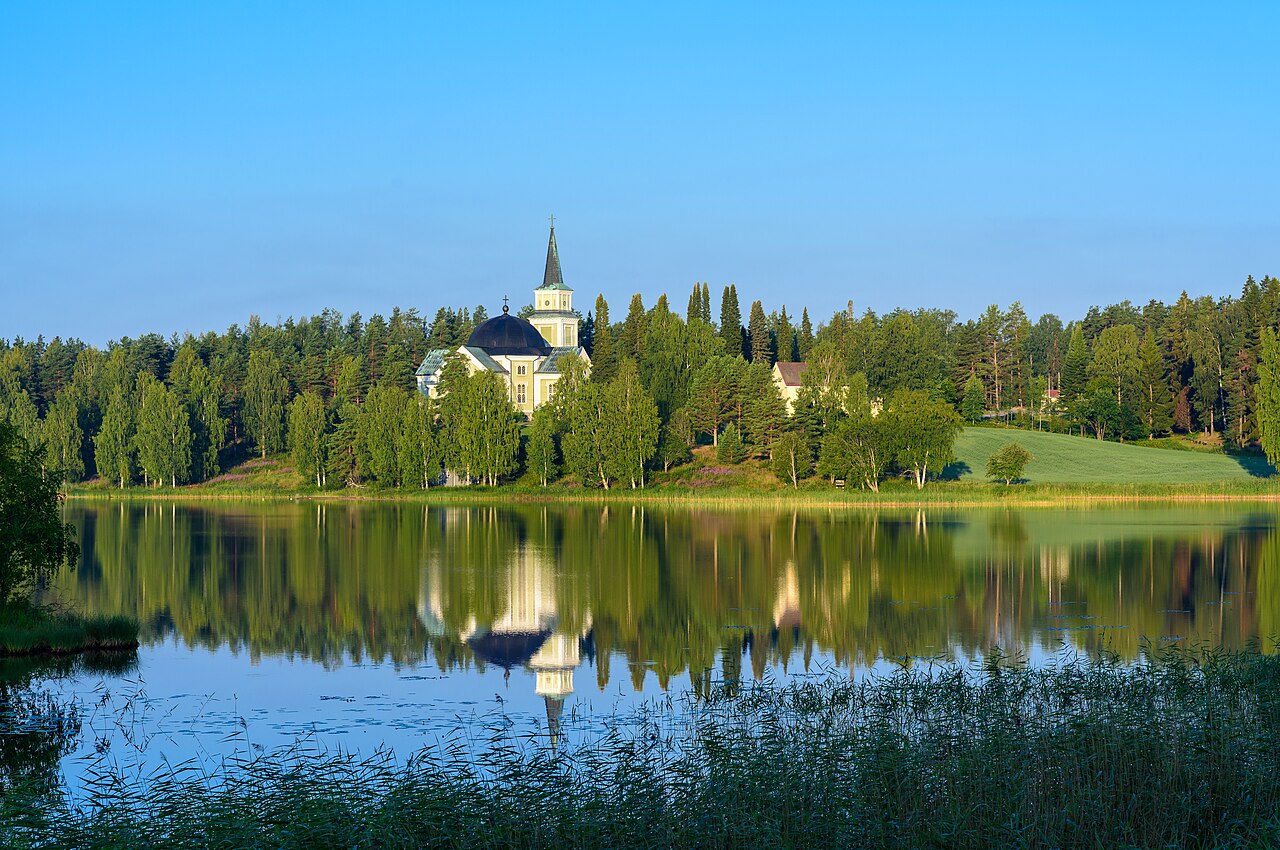
Ruokolahti Church
Completed in 1854, this domed wooden cross church combines Empire and Gothic Revival features on a hill above Lake Saimaa. The church hill is also associated with Albert Edelfelt’s 1887 painting Women of Ruokolahti on the Church Hill.
Saimaa Geopark introduction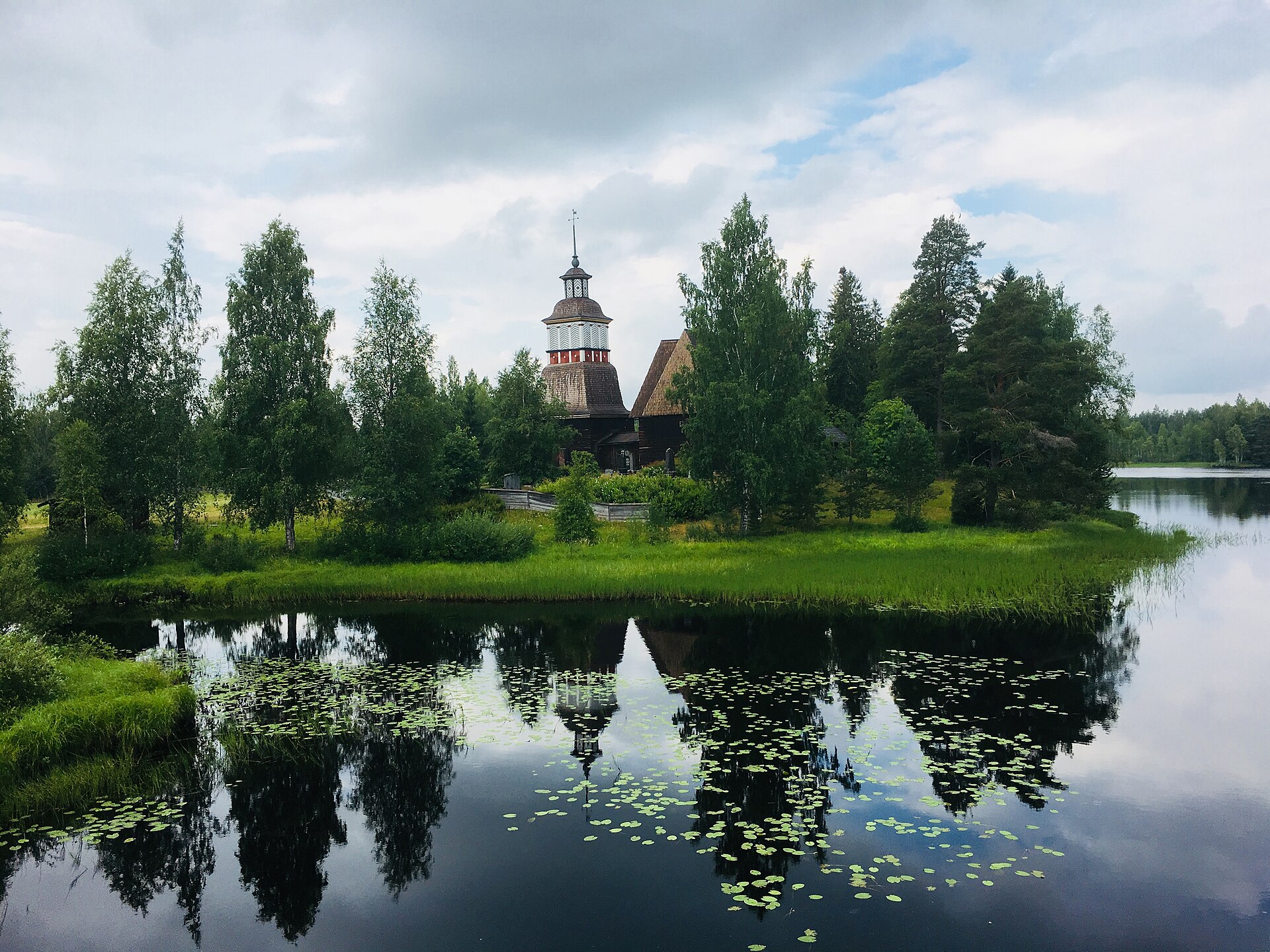
Petäjävesi Old Church
Built by Central Finnish craftspeople between 1763 and 1765, this log church brings Renaissance, Baroque and Gothic influences into a distinctly Finnish wooden tradition. It became a UNESCO World Heritage Site in 1994 and still hosts summer services and concerts.
Petäjävesi Old Church official website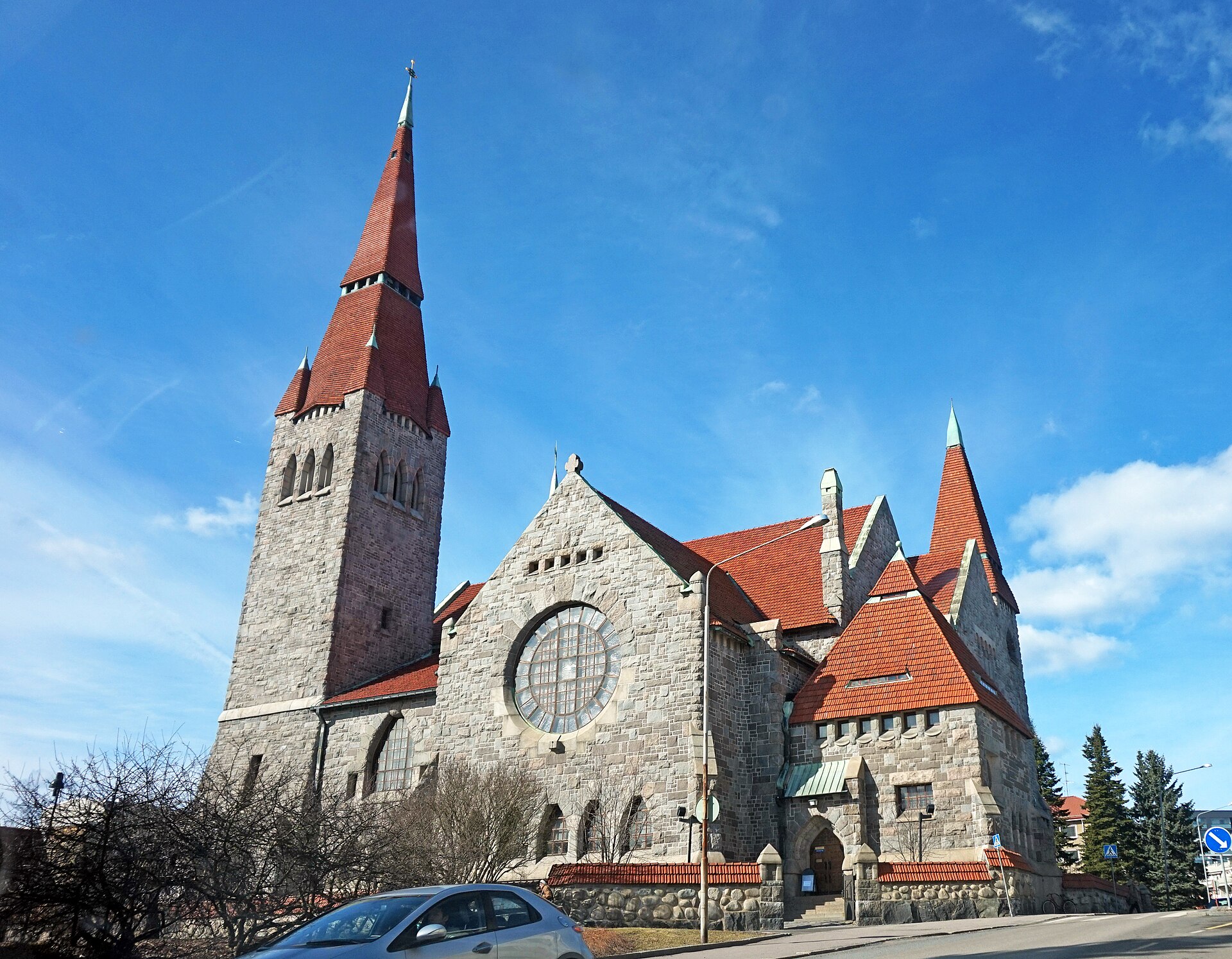
Tampere Cathedral
Completed in 1907 and designed by Lars Sonck, this National Romantic cathedral is also one of Finland’s most important settings for religious art. Its interior brings together Hugo Simberg’s symbolist frescoes and Magnus Enckell’s Resurrection altarpiece.
Tampere Cathedral and its art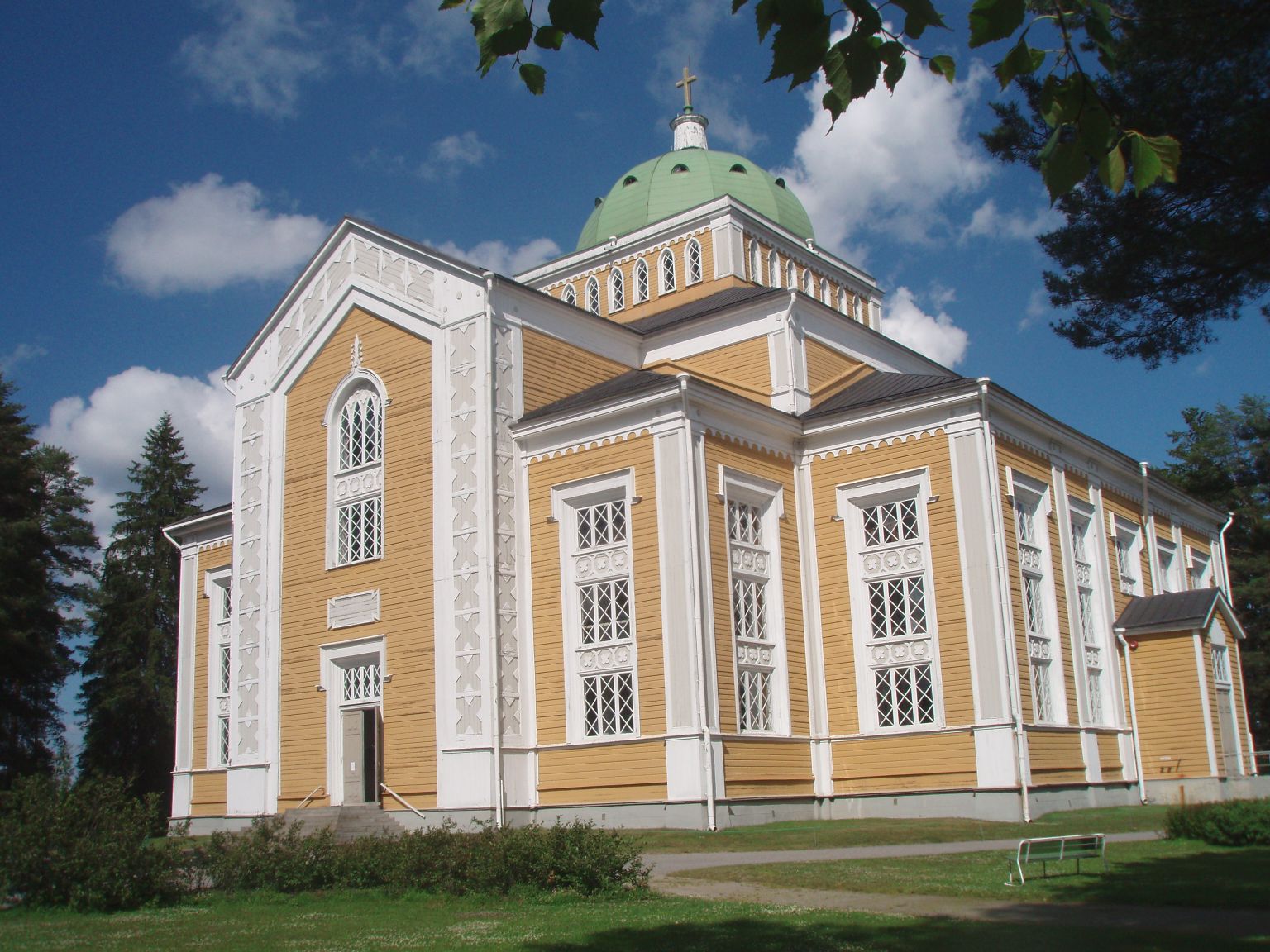
Kerimäki Church
Completed in 1847, Kerimäki Church is the world’s largest wooden Christian church. Its vast interior has seating for more than 3,000 people and reflects the scale and skill of nineteenth-century Finnish timber construction.
Kerimäki Church visitor informationHelsinki Cathedral
The white cathedral at Senate Square is the principal church of the Diocese of Helsinki and an active Lutheran place of worship.
Official cathedral websiteTemppeliaukio Church
Timo and Tuomo Suomalainen’s “Rock Church” was excavated directly into Helsinki bedrock and covered by a copper dome.
Official church websiteTurku Cathedral
Consecrated as a cathedral in 1300, it is the mother church of the Evangelical Lutheran Church of Finland and Finland’s national shrine.
Official cathedral websiteMuurame Church
Designed by Alvar Aalto in 1926–29, this early church combines Italian influences with details pointing toward Modernism.
Alvar Aalto FoundationLakeuden Risti Church
Alvar Aalto’s 1960 church and 65-metre bell tower form the spiritual anchor of his Seinäjoki civic centre.
Alvar Aalto FoundationChurch of the Three Crosses
Completed in Imatra in 1958, Alvar Aalto’s sculptural church combines worship space with flexible rooms for parish life.
Alvar Aalto FoundationChurch of the Cross
Completed in Lahti in 1978, this Alvar Aalto church is known for its triangular plan and cross formed by 52 façade windows.
Visit Alvar AaltoSaints Peter and Paul Lutheran Church, Viipuri/Vyborg
Now in Vyborg, Russia, this is the city’s only surviving Lutheran church. Returned to Lutheran use in 1991, it was restored with help from Finnish individuals, church organizations, Finn Church Aid and partner parishes. Today it belongs to the Evangelical Lutheran Church of Ingria.
Church of Ingria historyConnections across an ocean
From Finland to the Pacific Northwest
This map shows Finnish life as a network of places rather than a one-way journey. It includes present-day Finnish and Nordic communities across Washington, Oregon and British Columbia. Chicago appears as a historical rail gateway through which many immigrants continued west.
The dashed line represents connection, not a single documented travel route. Washington Census counts are not applied to the Oregon or Canadian markers.
One historical measure
People born in Finland living in Washington in 1910
The 1910 federal Census is not the point of this story. It is one of the few sources that shows in detail where Finland-born residents lived shortly before our congregation was founded in 1919. The figures help locate the communities in which churches, choirs and associations took root.
Largest county concentrations
Selected cities
| City | Born in Finland |
|---|---|
| Seattle | 1,298 |
| Aberdeen | 1,050 |
| Spokane | 270 |
| Tacoma | 223 |
| Everett | 118 |
| Bellingham | 37 |
A later point of comparison
Who was living in Washington in 1980?
The 1980 Census counted 1,474 Washington residents who were born in Finland. Of them, 128 reported arriving in the United States during the 1970s. This shows that a 1970s Finnish cohort was still present in Washington in 1980, but it does not count every arrival or reveal the return-migration rate.
Differences between two Censuses also reflect deaths, moves between states, new arrivals and sampling error. Permanent settlement and return to Finland require migration records or person-linked longitudinal data.
Open the 1980 source, Table 195Research notes
Sources and interpretation
Historical Census tables are valuable, but their categories reflect the assumptions and language of their time. This page keeps the original measurement visible while explaining its limits. County markers use approximate centers for readability.
- Statewide figures: Table 5PDF page 75, printed page 989. The Finland row gives the 1910 and 1900 statewide totals and percentage.
- County figures: Table IPDF pages 82, 84, 86 and 88, printed pages 996, 998, 1000 and 1002. Find the Finland row under “Foreign nationalities.”
- City figures: Tables II and IIIPDF pages 90–91, printed pages 1004–1005. These tables include Seattle, Spokane, Tacoma, Aberdeen, Bellingham and Everett.
- 1910 Census supplement for WashingtonState summary and explanation of historical categories
- 1910 instructions to Census enumeratorsHow birthplace, including Finland, was recorded
- Washington State Library county historiesChehalis County’s 1915 name change to Grays Harbor