A church returned to its congregation
A new beginning for Viipuri’s Saints Peter and Paul Church
Returned to Lutheran use in 1991, the church connects Viipuri’s Swedish-German congregational history, the renewed Church of Ingria, and years of support from Finnish congregations and volunteers.
The same church, then and now
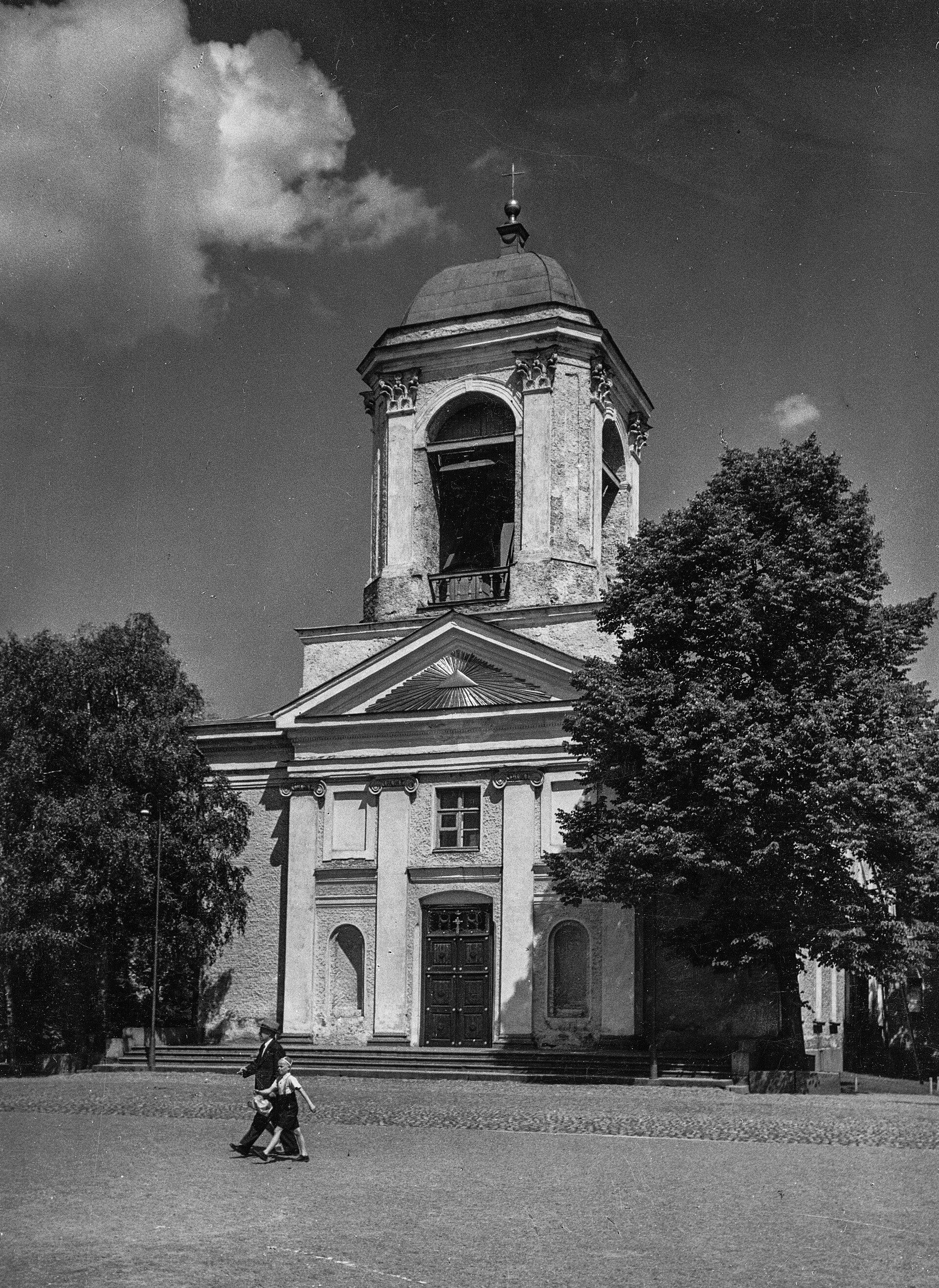
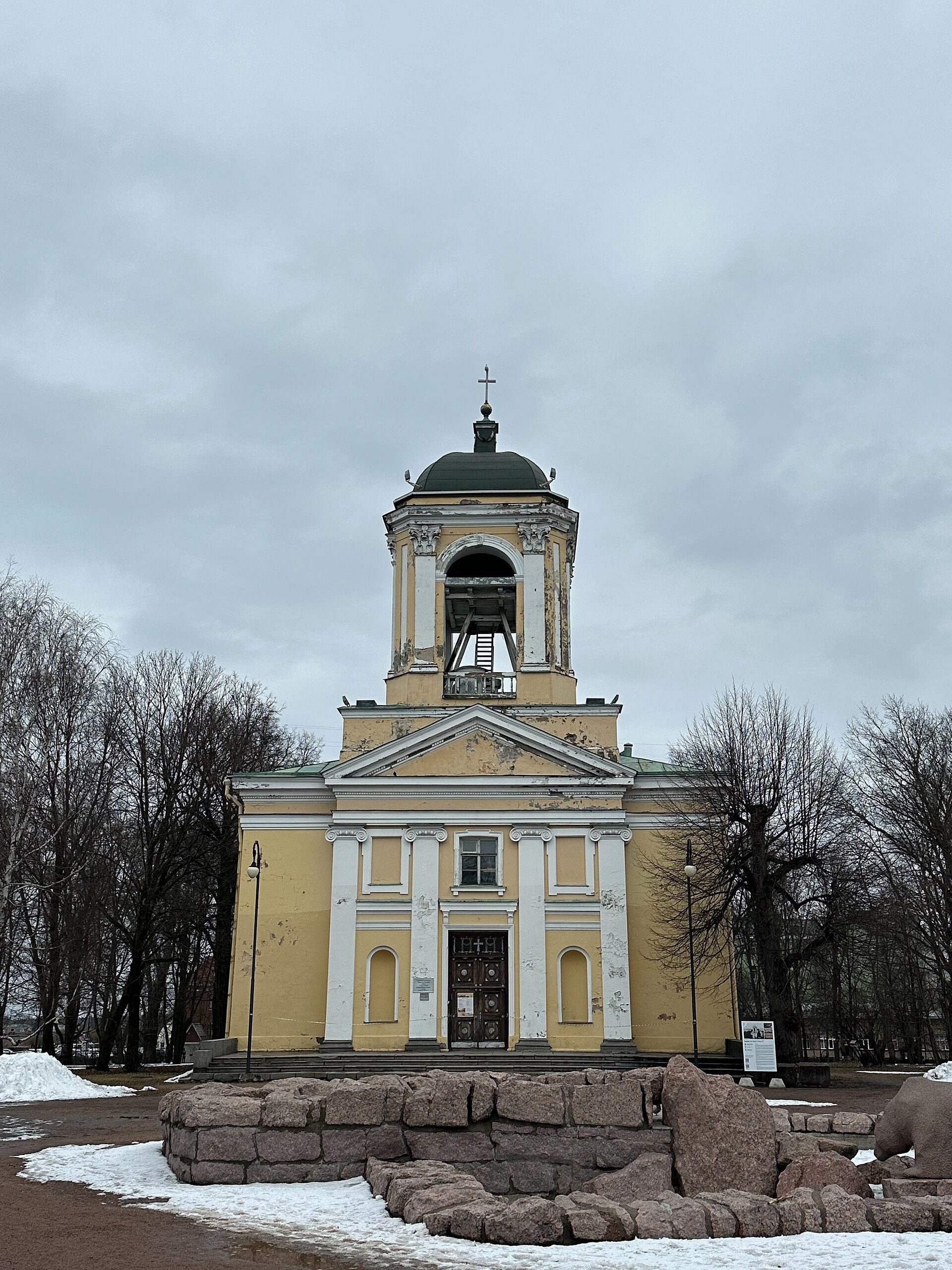
The building survived, the sanctuary changed
Vyborg’s only surviving Lutheran church
Completed in 1799, the church was built for Viipuri’s Swedish and German congregations. The building survived the Second World War with comparatively little structural damage, but afterward it was put to secular uses, including service as a warehouse, naval club, and cinema. Its altar and organ were destroyed or removed.
Viipuri had several Lutheran churches before the wars. Saints Peter and Paul is the only one that survives as a building and has returned to Lutheran worship.
A congregation before a building
A small community began again
According to a history published by the Lappeenranta parishes, an Evangelical Lutheran community of 16 members organized in Viipuri on June 29, 1989, and worshiped at School No. 10. Accounts from the Church of Ingria give 1990 as the congregation’s founding year. These dates need not conflict: a small initial community may have begun in 1989 and taken formal congregational shape the following year.
In 1991, an order from Soviet defense minister Dmitri Yazov transferred Saints Peter and Paul Church to Lutheran use. The church was reconsecrated, and Aimo Kymäläinen served as the congregation’s first pastor from 1991 to 1994.
Volunteer work, gifts, and parish ties
Restoration became a long collaboration
Returning the building did not mean that the church was immediately complete. A major renovation took place from 1993 to 1996. Finnish individuals, volunteer groups, parishes, church organizations, and Finn Church Aid supported the work. Furnishings arrived from different parts of Finland, and the organ came from Mikkeli.
Cooperation continued after the major renovation. A 2016 account from the Lappeenranta parishes describes Finnish volunteers still carrying out repairs at the church. The building’s present exterior is a reminder that preservation and maintenance are continuing work, not a single completed project.
Why does the 1991 return matter?
The church returned to worship during the Soviet Union’s final year, as religious communities were again becoming visible in public life. In Viipuri, the building reunited place, congregation, and worship. It also became a tangible connection among the Church of Ingria, Finnish parishes, and people for whom Viipuri’s Lutheran heritage remained important.