Finnish national costumes
At some concerts, singers in the Finnish Choral Society of Seattle wear Finnish national costumes. The stripes in a skirt, the lace on an apron or the shape of a pocket can help you recognize a regional design.
Finnish clothing vocabularyFrom Sunday best to national costume
The Finnish word kansanpuku refers to traditional folk dress, from work clothes to Sunday best. Churchgoers dressed up for the occasion. Outside the church, neighbors exchanged news and admired one another’s clothes.
A kansallispuku, or national costume, is based on the clothes people in a particular region wore for celebrations in the 1700s or 1800s. Finnish researchers began reconstructing these outfits in the late 1800s. Today some people choose the costume of a grandparent’s hometown. Others choose a design they love.
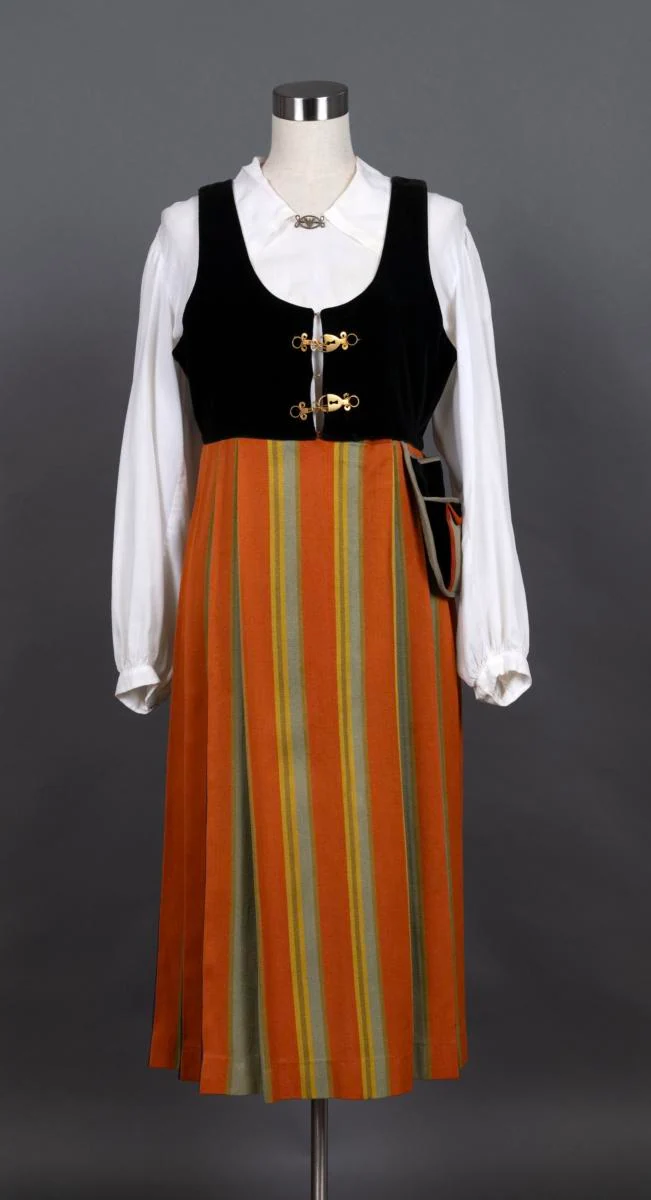
Two outfits from Finnish museums
Look at the pockets on these two garments. On the Viipuri costume, the pocket hangs from the bodice. On the Kuortane dress, a few stitches attach it directly to the skirt.
Viipuri national costume
Kuortane choir dress
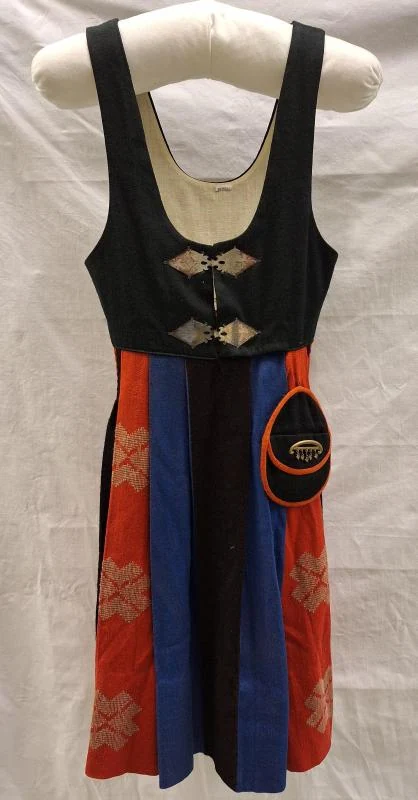
In the early 1930s, people in Kuortane and neighboring Alavus in South Ostrobothnia designed outfits especially for their choirs.
Regional and choir dress in South Ostrobothnia (in Finnish)Three regional details to look for
Säkylä in western Finland
In the Säkylä women’s costume, narrow green and dark red stripes run through the red skirt. Under the apron, the stripes change and the colors are more muted. The men’s outfit includes leather breeches and a short blue jacket.
Jääski in historical Karelia
The Jääski women’s costume has two apron designs. In one, six bands of bobbin lace join seven strips of woven cloth. Colored threads form patterns in the dark blue lace.
The two Jääski apron designs (in Finnish)Houtskär in the southwestern archipelago
On Houtskär, called Houtskari in Finnish, the women’s costume pairs a red wool skirt with a green lace-up bodice edged in yellow silk. An embroidered pocket peeks out from under the right side of the apron.
See the Houtskär costumes at Brage (in Swedish)Finnish clothing vocabulary
Kuoro means “choir” and puku means “outfit.” Together they form kuoropuku, a choir outfit like the one from Kuortane.
- kansanpuku
- traditional folk dress
- kansallispuku
- national costume modeled on a region’s historical festive dress
- kuoropuku
- choir outfit
- hame
- skirt
- liivi
- bodice or vest
- esiliina
- apron
- vyötasku
- pocket worn at the waist
- röijy
- traditional jacket
- raita
- stripe
- nyytinkipitsi
- a type of Karelian bobbin lace